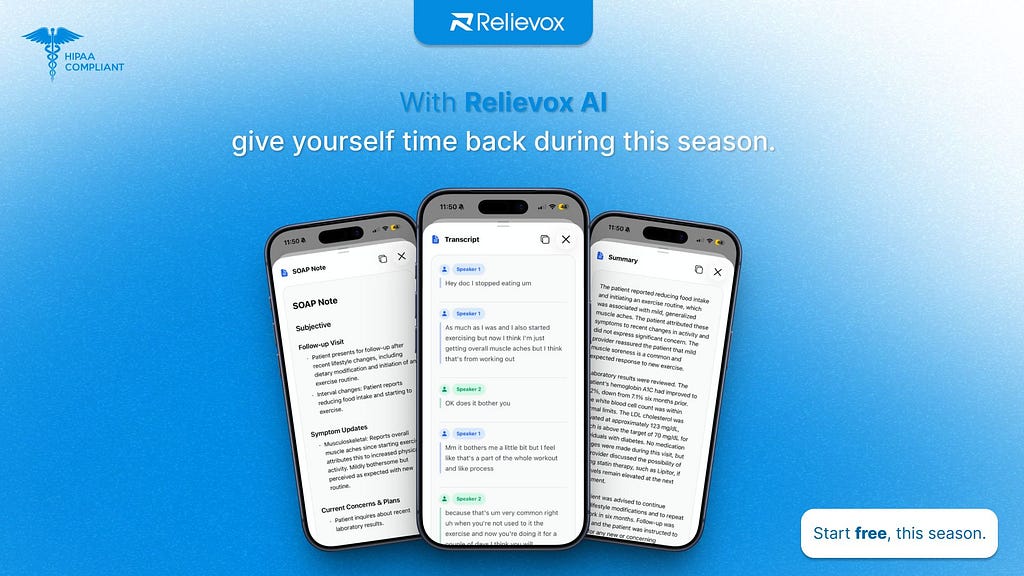
The healthcare landscape has witnessed a paradigmatic shift in recent years, with artificial intelligence transcending its traditional role as a mere documentation tool to become an integral component of clinical decision-making processes. While the initial promise of AI in healthcare centered primarily around administrative efficiency and record-keeping automation, contemporary applications have evolved to address the more complex challenges of diagnostic accuracy, treatment optimization, and patient safety enhancement.
The Evolution from Documentation to Decision Intelligence
Traditional electronic health record systems and basic AI note-taking for clinicians represented the first wave of healthcare digitization. However, the current generation of Clinical AI platforms has moved beyond simple transcription services to offer sophisticated analytical capabilities that support clinicians during critical decision points. This transformation reflects a fundamental understanding that healthcare providers require more than efficient documentation, they need intelligent systems that can synthesize vast amounts of clinical data and present actionable insights at the point of care.
The sophistication of modern Decision Support Systems lies in their ability to process multiple data streams simultaneously, including patient history, laboratory results, imaging studies, and real-time vital signs, while maintaining compliance with stringent regulatory requirements. These HIPAA-compliant AI solutions ensure that sensitive patient information remains protected while enabling healthcare organizations to leverage the full potential of their clinical data.
Real-Time Clinical Intelligence: The New Frontier
Contemporary healthcare delivery demands split-second decision-making capabilities, particularly in acute care settings where patient outcomes depend heavily on the speed and accuracy of clinical interventions. Advanced Clinical AI platforms now offer real-time analysis capabilities that can identify potential complications, suggest diagnostic pathways, and recommend treatment modifications based on continuously updated patient parameters.
This real-time intelligence extends beyond simple alert systems to provide comprehensive decision trees that account for patient-specific factors, contraindications, and evidence-based treatment protocols. The integration of these capabilities into existing clinical workflows has demonstrated measurable improvements in diagnostic accuracy and treatment efficacy while reducing the cognitive burden on healthcare providers.
Operational Excellence Through Intelligent Automation
The implementation of Auto Medical Coding using AI represents a significant advancement in healthcare operational efficiency. These systems not only ensure accurate coding for billing purposes but also contribute to broader quality improvement initiatives by identifying patterns in clinical documentation that may indicate opportunities for enhanced care delivery.
Modern AI-driven coding systems employ natural language processing algorithms that can interpret clinical narratives with remarkable precision, automatically assigning appropriate diagnostic and procedure codes while flagging potential discrepancies for human review. This dual approach — automated efficiency with human oversight — ensures both accuracy and compliance while freeing clinicians to focus on direct patient care activities.
Integration Challenges and Strategic Considerations
The successful implementation of advanced Clinical AI systems requires careful consideration of existing technological infrastructure, workflow integration points, and staff training requirements. Healthcare organizations must evaluate their current systems’ compatibility with new AI platforms while ensuring that implementation processes do not disrupt ongoing patient care activities.
Furthermore, the selection of HIPAA-compliant AI solutions necessitates thorough evaluation of vendor security protocols, data handling practices, and audit capabilities. Organizations must establish clear governance frameworks that define appropriate AI usage, monitor system performance, and maintain regulatory compliance across all applications.
The Path Forward: Sustainable AI Implementation
As healthcare organizations continue to adopt more sophisticated AI technologies, the focus has shifted from proof-of-concept implementations to sustainable, scalable solutions that can adapt to evolving clinical needs. The most successful deployments integrate seamlessly with existing workflows while providing measurable improvements in clinical outcomes, operational efficiency, and provider satisfaction.
The future of healthcare AI lies not in replacing human expertise but in augmenting clinical decision-making with intelligent, data-driven insights that enhance the natural capabilities of healthcare professionals. This collaborative approach between human intelligence and artificial intelligence represents the next evolution in healthcare delivery, promising improved patient outcomes through the strategic application of advanced technology.